Related Research Articles

Knowledge management (KM) is the set of procedures for producing, disseminating, utilizing, and overseeing an organization's knowledge and data. It alludes to a multidisciplinary strategy that maximizes knowledge utilization to accomplish organizational goals. Courses in business administration, information systems, management, libraries, and information science are all part of knowledge management (KM), a discipline that has been around since 1991. Information and media, computer science, public health, and public policy are some of the other disciplines that may contribute to KM research. Numerous academic institutions provide master's degrees specifically focused on knowledge management. As a component of their IT, human resource management, or business strategy departments, many large corporations, government agencies, and nonprofit organizations have resources devoted to internal knowledge management initiatives. These organizations receive KM guidance from a number of consulting firms. Organizational goals including enhanced performance, competitive advantage, innovation, sharing of lessons learned, integration, and ongoing organizational improvement are usually the focus of knowledge management initiatives. These initiatives are similar to organizational learning, but they can be differentiated by their increased emphasis on knowledge management as a strategic asset and information sharing. Organizational learning is facilitated by knowledge management. The setting of supply chain may be the most challenging situation for knowledge management since it involves several businesses without a hierarchy or ownership tie; some authors refer to this type of knowledge as transorganizational or interorganizational knowledge. industry 4.0 and digital transformation also add to that complexity, as new issues arise from the volume and speed of information flows and knowledge generation.
Organizational learning is the process of creating, retaining, and transferring knowledge within an organization. An organization improves over time as it gains experience. From this experience, it is able to create knowledge. This knowledge is broad, covering any topic that could better an organization. Examples may include ways to increase production efficiency or to develop beneficial investor relations. Knowledge is created at four different units: individual, group, organizational, and inter organizational.

Knowledge transfer refers to transferring an awareness of facts or practical skills from one entity to another. The particular profile of transfer processes activated for a given situation depends on (a) the type of knowledge to be transferred and how it is represented and (b) the processing demands of the transfer task. From this perspective, knowledge transfer in humans encompasses expertise from different disciplines: psychology, cognitive anthropology, anthropology of knowledge, communication studies and media ecology.
Tacit knowledge or implicit knowledge is knowledge that is difficult to extract or articulate—as opposed to conceptualized, formalized, codified, or explicit knowledge—is more difficult to convey to others through verbalization or writing. Examples of this include individual wisdom, experience, insight, motor skill, and intuition. An example of "explicit" information that can be recorded, conveyed, and understood by the recipient is the knowledge that London is in the United Kingdom. Speaking a language, riding a bicycle, kneading dough, playing an instrument, or designing and operating sophisticated machinery, on the other hand, all require a variety of knowledge that is difficult or impossible to transfer to other people and is not always known "explicitly," even by skilled practitioners.
Situated learning is a theory that explains an individual's acquisition of professional skills and includes research on apprenticeship into how legitimate peripheral participation leads to membership in a community of practice. Situated learning "takes as its focus the relationship between learning and the social situation in which it occurs".

The Fifth Discipline: The Art and Practice of the Learning Organization is a book by Peter Senge focusing on group problem solving using the systems thinking method in order to convert companies into learning organizations that learn to create results that matter as an organization. The five disciplines represent classical approaches for developing three core and timeless learning capabilities: fostering aspiration, developing reflective conversation, and understanding complexity.
Knowledge workers are workers whose main capital is knowledge. Examples include ICT professionals, physicians, pharmacists, architects, engineers, scientists, design thinkers, public accountants, lawyers, editors, and academics, whose job is to "think for a living".
An online community of practice (OCoP), also known as a virtual community of practice (VCoP), is a community of practice (CoP) that is developed and maintained on the Internet. OCoPs include active members who are practitioners, or "experts," in the specific domain of interest. Members participate in a process of collective learning within their domain. Community social structures are created to assist in knowledge creation and sharing, which is negotiated within an appropriate context. Community members learn through both instruction-based learning and group discourse. Finally, multiple dimensions facilitate the long-term management of support and the ability for synchronous interactions.

Integrated Computer-Aided Manufacturing (ICAM) is a US Air Force program that develops tools, techniques, and processes to support manufacturing integration. It influenced the computer-integrated manufacturing (CIM) and computer-aided manufacturing (CAM) project efforts of many companies. The ICAM program was founded in 1976 and initiative managed by the US Air Force at Wright-Patterson as a part of their technology modernization efforts. The program initiated the development a series of standards for modeling and analysis in management and business improvement, called Integrated Definitions, short IDEFs.
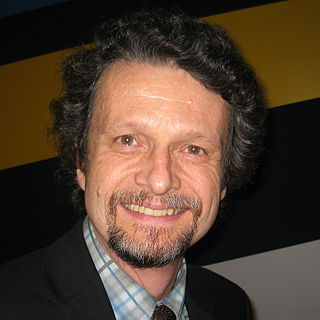
Étienne Charles Wenger is an educational theorist and practitioner, best known for his formulation of the theory of situated cognition and his more recent work in the field of communities of practice.
Corporate amnesia is a phrase used to describe a situation in which businesses, and other types of co-operative organizations, lose their memory of how to do things. The condition is held, by some people, to be analogous to individual amnesia.
Organizational memory (OM), sometimes called institutional memory or corporate memory, is the accumulated body of data, information, and knowledge created in the course of an organization's existence. The concept of organizational memory includes the ideas of components knowledge acquisition, knowledge processing or maintenance, and knowledge usage like search and retrieval. Falling under the wider disciplinary umbrella of knowledge management, it has two repositories: an organization's archives, including its electronic data bases; and individuals' memories.
A community of practice (CoP) is a group of people who "share a concern or a passion for something they do and learn how to do it better as they interact regularly". The concept was first proposed by cognitive anthropologist Jean Lave and educational theorist Etienne Wenger in their 1991 book Situated Learning. Wenger significantly expanded on this concept in his 1998 book Communities of Practice.
A network-centric organization is a network governance pattern which empowers knowledge workers to create and leverage information to increase competitive advantage through the collaboration of small and agile self-directed teams. It is emerging in many progressive 21st century enterprises. This implies new ways of working, with consequences for the enterprise’s infrastructure, processes, people and culture.
Knowledge sharing is an activity through which knowledge is exchanged among people, friends, peers, families, communities, or within or between organizations. It bridges the individual and organizational knowledge, improving the absorptive and innovation capacity and thus leading to sustained competitive advantage of companies as well as individuals. Knowledge sharing is part of the knowledge management process.
A knowledge organization is a management idea, describing an organization in which people use systems and processes to generate, transform, manage, use, and transfer knowledge-based products and services to achieve organizational goals.

In a community of practice, duality refers to a tension between two forces which become a driving force for change and creativity. Wenger uses the concept of dualities to examine the forces that create and sustain a community of practice. He describes a duality as "a single conceptual unit that is formed by two inseparable and mutually constitutive elements whose inherent tensions and complementarity give the concept richness and dynamism".
Communities that support innovation have been referred to as communities of innovation (CoI), communities for innovation, innovation communities, open innovation communities, and communities of creation.
The SECI model of knowledge dimensions is a model of knowledge creation that explains how tacit and explicit knowledge are converted into organizational knowledge. The aim is to change the explicit knowledge of the model back into the tacit knowledge of the employees. In this case, employees' tacit knowledge can be kept in the organization. When employees express their thoughts and ideas openly and share their best working practices, it can lead to new innovations and help to make operations more efficient.
A landscape of practice (LoP) is a social sciences concept introduced by Etienne Wenger-Trayner and Beverly Wenger-Trayner in a 2014 book.
References
- Adkins, Randy. "Airmen Tap Into Knowledge Now." AFCEA Signal Connections. 15 May 2008
- Brook, Doug. "Triune Software’s Air Force Knowledge Now" Solution wins 2006 Knowledge Management Award". 2006. 19 Nov. 2007
- Turnipseed, Cathy. "Transformation-U.S. Department of Defense." Air Force Center Improves Access to Knowledge. 2005. 19 Nov. 2007.
- Morrow, Jim. "Air Force Link". Tons of Knowledge Resides in Air Force Web Site. 2003. 19 Nov. 2007
- Lesser, Eric L. (2000). Knowledge and Communities. Massachusetts: Butterworth-Heinemann. ISBN 0-7506-7293-5.
- English & Baker. (2006) Winning the Knowledge Transfer Race. New York: McGraw-Hill. ISBN 0-07-145794-1.
- Davenport, Rex. “Does Knowledge Management Still Matter?” Training and Development Feb. 2005: 18–25.
- Myers, Paul S. (1996). Knowledge Management and Organizational Design. Massachusetts: Butterworth-Heinemann. ISBN 0-7506-9749-0
- Air Force Knowledge Now (AFKN) Team (2007). Knowledge Centric Operations. Dayton: Triune Group. 1–23
- Davenport & Prusak. (2000). Working Knowledge. Massachusetts: Harvard Business School Press; 2Rev Ed edition ISBN 1-57851-301-4