Malaria is a mosquito-borne infectious disease which is transmitted by the bite of Anophelesmosquitoes.[5][3] Human malaria causes symptoms that typically include fever, fatigue, vomiting, and headaches.[1][6] In severe cases, it can cause jaundice, seizures, coma, or death.[1][7] Symptoms usually begin 10 to 15 days after being bitten by an infected Anopheles mosquito.[8][9] If not properly treated, people may have recurrences of the disease months later.[3] In those who have recently survived an infection, reinfection usually causes milder symptoms.[1] This partial resistance disappears over months to years if the person has no continuing exposure to malaria.[1] The mosquitoes themselves are harmed by malaria, causing reduced lifespans in those infected by it.[10]
Malaria is caused by single-celled eukaryotes of the genus Plasmodium.[8] In mammals, it is spread through bites of infected female Anopheles mosquitoes.[8][11] The mosquito bite introduces the parasites from the mosquito's saliva into the blood.[3] The parasites initially reproduce and mature in the liver without causing symptoms.[12] After a few days the mature parasites spread into the bloodstream, where they infect and destroy red blood cells, causing the symptoms of infection.[13] Five species of Plasmodium commonly infect humans.[8] The three species associated with more severe cases are P.falciparum (which is responsible for the vast majority of malaria deaths), P.vivax, and P.knowlesi (a simian malaria that spills over into thousands of people a year).[14][15]P.ovale and P.malariae generally cause a milder form of malaria.[1][8] Malaria is typically diagnosed by the microscopic examination of blood using blood films, or with antigen-basedrapid diagnostic tests.[1] Methods that use the polymerase chain reaction to detect the parasite's DNA have been developed, but they are not widely used in areas where malaria is common, due to their cost and complexity.[16]
The risk of disease can be reduced by preventing mosquito bites through the use of mosquito nets and insect repellents or with mosquito-control measures such as spraying insecticides and draining standing water.[1] Several prophylactic medications are available to prevent malaria in areas where the disease is common.[3] As of 2023, two malaria vaccines have been endorsed by the World Health Organization.[17] Resistance among the parasites has developed to several antimalarial medications; for example, chloroquine-resistant P.falciparum has spread to most malaria-prone areas, and resistance to artemisinin has become a problem in some parts of Southeast Asia.[3] Because of this, drug treatment for malaria infection should be tailored to best fit the plasmodium species involved and the geographical location where the infection was acquired.[18]
The disease is widespread in the tropical and subtropical regions that exist in a broad band around the equator.[19][1] This includes much of sub-Saharan Africa, Asia, and Latin America.[3] In 2023, some 263 million cases of malaria worldwide resulted in an estimated 597,000 deaths.[20] Around 95% of the cases and deaths occurred in sub-Saharan Africa.[20] Malaria is commonly associated with poverty and has a significant negative effect on economic development;[21][22] in Africa, it is estimated to result in economic losses of US$12 billion a year due to increased healthcare costs, lost ability to work, and adverse effects on tourism.[23]
The term malaria originates from MedievalItalian: mala aria, 'bad air', a part of miasma theory; the disease was formerly called ague, paludism or marsh fever due to its association with swamps and marshland.[24] The term appeared in English at least as early as 1768.[25] The scientific study of malaria is called malariology.[26]
Signs and symptoms
Main symptoms of malaria
Symptoms during the early stages of malaria infection are fever, chills, headache, nausea, and vomiting and diarrhea; more serious cases may show enlarged spleen or liver, and mild jaundice.[28][29] These symptoms can resemble other conditions such as sepsis, gastroenteritis, flu and other viral diseases.[16][30] Without treatment, symptoms - particularly the fever - can settle into a regular pattern, recurring every two or three days (paroxysmal attacks).[31][28]
Symptoms typically begin 10–15 days after the initial mosquito bite, but can occur as late as several months after infection. Travellers taking preventative malaria medications may develop symptoms once they stop taking the drugs.[32]
Severe malaria occurs when the Plasmodium infection causes damage to vital organs such as the kidney, liver, lungs or brain. Symptoms include severe anemia, jaundice, convulsions, confusion, coma, kidney failure and eventually death.[32][31]. Severe malaria is usually caused by P.falciparum;[28] it should be treated as a medical emergency.[33]
Complications
A unique feature of P falciparum is its ability to generate adhesive proteins on the surface of infected red blood cells (RBC). Infected RBCs obstruct capillaries (causing hypoxia) and accumulate in vital organs, interfering with their function.[34]P falciparum infection underlies most severe complications of malaria.[35]
Cerebral malaria is a form of severe malaria affecting the brain. Infected RBCs blocking capillaries in the brain trigger an immune reaction, which in turn damages the blood-brain barrier.[36] Individuals with cerebral malaria exhibit neurological symptoms, such as confusion, seizures, or coma.[30] Cerebral malaria, if untreated, can lead to death within forty-eight hours of the first symptoms; survivors may have long-term neurological damage.[30][31]
Severe anemia is caused by a combination of the destruction of RBCs (both infected and uninfected) together with reduced RBC production in the bone marrow; it is a major cause of deaths in children under 5.[37]
Malaria can lead to acute respiratory distress syndrome in up to 25% of cases. It is caused by damage to the capillary endothelium, in turn damaging the alveoli of the lung.[23][38] Symptoms are extreme shortness of breath and a bluish tinge to the lips (cyanosis) indicating lack of oxygen.[38] It is a leading killer adults, with around 40% mortality once symptoms begin.[39]
The life cycle of malaria parasites: Sporozoites are introduced by a mosquito bite. When they reach the liver, they multiply into thousands of merozoites. The merozoites infect red blood cells and replicate, infecting more and more red blood cells. Some parasites form gametocytes, which are taken up by a mosquito, continuing the life cycle.
Malaria is caused by infection with parasites in the genus Plasmodium, which are transmitted between the human hosts by mosquitoes in the genus Anopheles.[43]
Life cycle
The plasmodium parasite has a complex life cycle involving human and mosquito hosts, taking a different form at each stage of the cycle.[44]
🦟The Anopheles mosquitoes initially get infected by Plasmodium by taking a blood meal from a previously infected person. The next time the mosquito feeds, its bite introduces Plasmodium - in a mobile form called sporozoites - into a new human host.[44]
🧍🏽Within the human host, the sporozoites enter bloodstream and travel to the liver, where they invade liver cells (hepatocytes).[45]
🧍🏽They grow and divide in the liver, with each infected hepatocyte eventually harboring up to 40,000 parasites.[45] After 5 to 25 days the infected hepatocytes break down, releasing Plasmodium - in a smaller form called merozoites, into the bloodstream.[44]
🧍🏽In the blood, the merozoites rapidly invade individual red blood cells, with each replicating over 24–72 hours to form 16–32 new merozoites.[45] The infected red blood cell bursts, releasing new merozoites which again infect red blood cells, resulting in a cycle that continuously amplifies the number of parasites in an infected person.[45]
🧍🏽A small portion of parasites do not replicate, but instead develop into early sexual stage parasites called male and female gametocytes. These gametocytes develop in the bone marrow for 11 days, then return to the blood circulation to await uptake by the bite of another mosquito.[45]
🦟Once inside a mosquito, the gametocytes undergo sexual reproduction, and eventually form daughter sporozoites that migrate to the mosquito's salivary glands to be injected into a new host when the mosquito next bites.[45][44]
The liver infection causes no symptoms; all symptoms of malaria result from the infection of red blood cells.[46] Symptoms develop once there are more than around 100,000 parasites per milliliter of blood.[46] Many of the symptoms associated with severe malaria are caused by the tendency of P. falciparum to bind to blood vessel walls, resulting in damage to the affected vessels and surrounding tissue. Parasites sequestered in the blood vessels of the lung contribute to respiratory failure. In the brain, they contribute to coma. During pregnancy they accumulate in the intervillous space and hinder the function of the placenta, contributing to low birthweight and preterm labor, and increasing the risk of abortion and stillbirth.[46] The destruction of red blood cells during infection often results in anemia, exacerbated by reduced production of new red blood cells during infection.[46]
Only female mosquitoes feed on blood; male mosquitoes feed on plant nectar and do not transmit the disease. Females of the mosquito genus Anopheles prefer to feed at night. They usually start searching for a meal at dusk, and continue through the night until they succeed.[44] However, they may be adapting to the extensive use of bed nets and beginning to bite earlier, before bed-nets are deployed.[47] Malaria parasites can also be transmitted by blood transfusions, although this is rare.[48]
Plasmodium species
In humans, malaria is caused by six Plasmodium species: P.falciparum, P.malariae, P.ovale curtisi, P.ovale wallikeri, P.vivax and P.knowlesi.[46] Among those infected, P.falciparum is the most common species identified (~75%) followed by P.vivax (~20%).[16]P.falciparum in prevalent in Africa and accounts for the majority of deaths,[49] while P.vivax is dominant outside Africa.[50][35] Some cases have been documented of human infections with several species of Plasmodium from higher apes, but except for P.knowlesi—a zoonotic species that causes malaria in macaques[51]—these are mostly of limited public health importance.[52]
Two species - P. vivax and P. ovale- form a dormant stage called a hypnozoite which can persist in the liver, even after drug treatment has eliminated the infection from the blood. These can reactivate after weeks or months and cause relapse of the disease.[44]
Recurrent malaria
Symptoms of malaria can recur after varying symptom-free periods. Depending upon the cause, recurrence can be classified as either recrudescence, relapse, or reinfection. Recrudescence is when symptoms return after a symptom-free period due to failure to remove blood-stage parasites by adequate treatment.[53] Relapse is when symptoms reappear after the parasites have been eliminated from the blood but have persisted as dormant hypnozoites[54] in liver cells. Reinfection means that parasites were eliminated from the entire body but a new infection has established. Recurrence of infection within two weeks of treatment ending is typically attributed to treatment failure.[55]
Electron micrograph of a Plasmodium falciparum-infected red blood cell (center), illustrating adhesion protein "knobs"
Malaria infection develops via two phases: one that involves the liver (exoerythrocytic phase), and one that involves red blood cells, or erythrocytes (erythrocytic phase). When an infected mosquito pierces a person's skin to take a blood meal, sporozoites in the mosquito's saliva enter the bloodstream and migrate to the liver where they infect hepatocytes, multiplying asexually and asymptomatically for a period of 8–30 days.[56] During this time, these organisms differentiate to yield thousands of merozoites, which, following rupture of their host cells, escape into the blood and infect red blood cells to begin the erythrocytic stage of the life cycle.[56]
The first phase of infection is asymptomatic; the clinical symptoms of malaria are all associated with the merozoite stage of the life cycle.[32] In this, the parasites multiply asexually within red blood cells, periodically breaking out to infect new ones. Within each infected erythrocyte, the parasite multiplies, consuming the cytoplasm as it does. After a period of 2 or 3 days, the erythrocyte bursts, releasing a number (between 16 and 32) of new merozoites.[57] This release of merozoites into the bloodstream, together with their waste products and fragments of erythrocyte, triggers fever and other symptoms which can be periodic and intense.[56][32]
In some species of Plasmodium, some sporozoites do not immediately develop into exoerythrocytic-phase merozoites, but instead, produce hypnozoites that remain dormant for periods ranging from several months (7–10 months is typical) to several years.[58] After a period of dormancy, they reactivate and produce merozoites. Hypnozoites are responsible for long incubation and late relapses in P.vivax and P.ovale infections.[58][59]
Immune system evasion
Immune evasion is a key feature of Plasmodium, underlying its success and persistence as a parasite.[60] Approximately 10% of the Plasmodium genome is dedicated to mechanisms which avoid or subvert the immune system.[61]
Liver
Illustration of a merosome budding off from an infected hepatocyte
Specialised macrophages called Kupffer cells defend the liver; they identify alien material in the bloodstream and destroy it. Sporozoites attack Kupffer cells and neutralise them.[62] They transit through these impaired cells (which die after a few hours) to infect hepatocytes.[62] Within the hepatocyte, they generate thousands of merozoites within a vacuole which protects them from cellular defence mechanisms.[63] After a few days, the infected hepatocyte releases merozoites in batches called merosomes, which bud off from the hepatocyte's membrane. This membrane cloaks the merozoites, enabling them to sneak past the remaining Kupffer cells to exit the liver.[64][63][65]
Circulation
An illustration of infected erythrocytes (IE) clustering in the intervillous space around placental villi.
Free merozoites in the blood circulation system are vulnerable to attack by leucocytes which target their surface antigens. The parasite defeats this defence by means of antigenic polymorphism;[66] at each stage of the life cycle it expresses a different variant of surface antigen, effectively a moving target which outpaces the adaptive immune system.[63] Once they penetrate a red blood cell (RBC) merozoites have a safe haven, masked from leucocytes and protected within a vacuole. Infected RBCs can nevertheless be detected and destroyed, either by the spleen or by phagocytes.[67] To avoid this fate, the merozoite generates adhesive proteins which appear as knobs on the surface of infected RBCs.[68] These work in two ways. They bind to uninfected RBCs forming clumps - nicknamed "rosettes" - in which the infected cell at the centre is shielded by the uninfected cells surrounding it; rosettes interfere with normal blood flow in capillaries.[69] Alternatively infected RBCs can avoid passage through the spleen by adhering (sequestering) to the walls of blood vessels in tissues such as the brain, lungs, and intervillous spaces (in pregnancy).[70] Both sequestered and rosetted types interfere with the normal organ functions, leading to complications such as cerebral malaria and pregnancy-associated malaria.[63]
The effect of sickle cell trait on malaria immunity illustrates some evolutionary trade-offs that have occurred because of endemic malaria. Sickle cell trait causes a change in the haemoglobin molecule in the blood. Normally, red blood cells have a very flexible, biconcave shape that allows them to move through narrow capillaries; however, when the modified haemoglobinS molecules are exposed to low amounts of oxygen, or crowd together due to dehydration, they can stick together forming strands that cause the cell to distort into a curved sickle shape. In these strands, the molecule is not as effective in taking or releasing oxygen, and the cell is not flexible enough to circulate freely. In the early stages of malaria, the parasite can cause infected red cells to sickle, and so they are removed from circulation sooner. This reduces the frequency with which malaria parasites complete their life cycle in the cell. Individuals who are homozygous (with two copies of the abnormal haemoglobin beta allele) have sickle-cell anaemia, while those who are heterozygous (with one abnormal allele and one normal allele) experience resistance to malaria without severe anaemia. Although the shorter life expectancy for those with the homozygous condition would tend to disfavour the trait's survival, the trait is preserved in malaria-prone regions because of the benefits provided by the heterozygous form.[73][74]
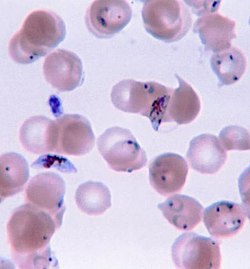
The blood film is the gold standard for malaria diagnosis.Ring-forms and gametocytes of Plasmodium falciparum in human blood
Due to the non-specific nature of malaria symptoms, diagnosis is typically suspected based on symptoms and travel history, then confirmed with a laboratory test to detect the presence of the parasite in the blood (parasitological test). In areas where malaria is common, the World Health Organization (WHO) recommends clinicians suspect malaria in any person who reports having fevers, or who has a current temperature above 37.5°C without any other obvious cause.[75] Malaria should be suspected in children with signs of anemia: pale palms or a laboratory test showing hemoglobin levels below 8 grams per deciliter of blood.[75] In areas of the world with little to no malaria, testing is only recommended for people with possible exposure to malaria (typically travel to a malaria-endemic area) and unexplained fever.[75][76]
Malaria is usually confirmed by the microscopic examination of blood films or by antigen-based rapid diagnostic tests (RDT). Microscopy—i.e. examining Giemsa-stained blood with a light microscope—is the gold standard for malaria diagnosis.[46] Microscopists typically examine both a "thick film" of blood, allowing them to scan many blood cells in a short time, and a "thin film" of blood, allowing them to clearly see individual parasites and identify the infecting Plasmodium species.[46] Under typical field laboratory conditions, a microscopist can detect parasites when there are at least 100 parasites per microliter of blood, which is around the lower range of symptomatic infection.[75] Microscopic diagnosis is relatively resource intensive, requiring trained personnel, specific equipment and a consistent supply of microscopy slides and stains.[75]
Rapid diagnostic tests (RDTs) can be used to confirm a microscopic diagnosis;[76] they are also used in places where microscopy is unavailable. RDTs are fast and easily deployed to places without full diagnostic laboratories.[75] The test detects parasite proteins in a fingerstick blood sample.[75] A variety of RDTs are available, targeting the parasite proteins lactate dehydrogenase, aldolase, or histidine rich protein 2 (HRP2, which is specific to P. falciparum only),.[75] The HRP2 test is widely used in Africa, where P. falciparum predominates.[46] However, since HRP2 persists in the blood for up to five weeks after an infection is treated, an HRP2 test sometimes cannot distinguish whether someone currently has malaria or previously had it.[75] Additionally, some P. falciparum parasites lack the HRP2 gene, complicating detection.[77] Rapid tests also cannot quantify the parasite burden in a person, nor the species of Plasmodium involved.[4][76]
A polymerase chain reaction (PCR) test is the most sensitive method for diagnosing malaria. The test amplifies parasite DNA in blood; it can detect Plasmodium and identify the species,even at very low levels in the blood.[78] It requires specialised laboratory equipment so is rarely available in developing countries; it is generally used in developed world to confirm diagnosis in returning travellers.[78][76]
Treatment
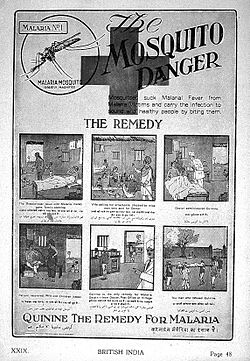
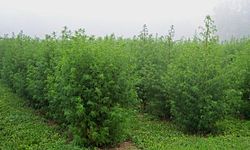
An advertisement for quinine as a malaria treatment from 1927Artemisia annua, also known as sweet wormwood, the original source of artemisinin
Malaria is treated with antimalarial medications. To ensure a complete cure and prevent the parasite from developing drug resistance, treatment guidelines since 2001 generally require two drugs in combination, with one of them being a derivative of artemesinin and the other a complementary drug.[79][80] The exact combination of drugs depends on the Plasmodium species involved, the probability of drug resistance, relevant facts from the patient's medical and travel history, and any previous use of antimalarials.[81][82] Treatment regimens in national formularies[a] are generally based on guidelines issued by WHO which are updated regularly.[85][86]
Malaria is generally classified as either "severe" or "uncomplicated".[16][82] Symptoms which indicate severe malaria include the following (not a complete list):[82][90]
A high level of parasites visible in a blood smear.
Uncomplicated malaria
Uncomplicated malaria can be treated using oral medication taken for between 3 and 7 days.[89] The drug regimen should be selected according to Plasmodium species, location and patient's history. As an example, the most common first-line treatment for uncomplicated P. falciparum malaria is Artemether-lumefantrine taken orally over three days.[91][88] This is not always suitable, so other drug combinations are recommended.[89] Treatment should start as soon as possible after diagnosis, in order to prevent severe symptoms from developing.[92] In case of infection by P. vivax or P. ovale (which form dormant hypnozoites in the liver) treatment should continue for a further 7 to 14 days.[89]
Severe and complicated malaria
Severe malaria is generally caused by P. falciparum; it is almost always fatal if untreated.[93] Even with treatment, the fatality rate is estimated between 13% and 20%, with survivors often facing long term after-effects.[94] The standard treatment is intravenous artesunate, switching to oral medication once the patient is stable.[88][95] Patients may deteriorate rapidly so close monitoring, preferably in a high dependency unit, is vital.[96]
Pregnancy
Malaria in pregnancy is more likely to be serious, possibly fatal, for both mother and child; pregnant women are three times more likely to develop severe malaria.[97] Some drugs could injure the developing embryo, especially during the first trimester. Special treatment regimens are recommended, which vary according to the trimester and pose minimal risk.[97][98]
Drug Resistance
Drug resistance poses a growing problem in malaria treatment; Plasmodium populations have a high level of genetic diversity and a rapid reproduction rate which enable them to adapt and evade challenges from antimalarials.[99][100]P. falciparium parasites began to develop resistance to the first synthetic antimalarial, chloroquine, in the 1950s;[101] since then chloroquine resistance has spread to almost the entire range of this species.[102] Resistance to proguanil developed even more rapidly; the drug was introduced in 1948 and resistance began to be noted the next year, in 1949.[101] In 2001, malaria with partial resistance to artemisinin emerged in Southeast Asia; resistance has subsequently spread to parts of Africa.[101][103] In order to overcome resistance, drugs may be given in combination, in higher doses, or for longer periods; there is an urgent need for new drugs to be brought on line.[101][104]
Prognosis
When properly treated, people with uncomplicated malaria can usually expect a complete recovery.[105] However, severe malaria can progress extremely rapidly and cause death within hours or days.[106] In the most severe cases of the disease, fatality rates can reach 20%, even with intensive care and treatment.[16]
Malaria has the potential to cause permanent damage to many organs, especially the brain, kidney, liver and spleen.[107] During childhood, malaria causes anaemia during a period of rapid brain development, and also direct brain damage resulting from cerebral malaria.[108] Survivors of cerebral malaria have an increased risk of neurological and cognitive deficits, behavioural disorders, and epilepsy.[109]
Prevention
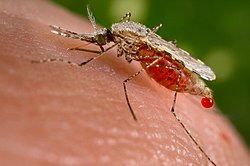
An Anopheles stephensi mosquito shortly after obtaining blood from a human (the droplet of blood is expelled as a surplus). This mosquito is a vector of malaria, and mosquito control is an effective way of reducing its incidence.
Methods used to prevent malaria include vaccination, prophylactic medication, mosquito elimination and the prevention of bites. The presence of malaria in an area requires a combination of high human population density, high Anopheles mosquito population density and high rates of transmission from humans to mosquitoes and from mosquitoes to humans. If any of these is lowered sufficiently, the parasite eventually disappears from that area, as happened in North America, Europe, and parts of the Middle East. However, unless the parasite is eliminated from the whole world, it could re-establish if conditions revert to a combination that favors the parasite's reproduction. Furthermore, the cost per person of eliminating anopheles mosquitoes rises with decreasing population density, making it economically unfeasible in some areas.[citation needed]
Prevention of malaria may be more cost-effective than treatment of the disease in the long run, but the initial costs required are out of reach of many of the world's poorest people. There is a wide difference in the costs of control (i.e. maintenance of low endemicity) and elimination programs between countries. For example, in China — whose government in 2010 announced a strategy to pursue malaria elimination — the required investment was a small proportion of public expenditure on health.[citation needed] (In 2021, the World Health Organization confirmed that China has eliminated malaria.[110]) In contrast, a similar programme in Tanzania would cost an estimated one-fifth of the public health budget.[111]
It has proved very difficult to develop an effective malaria vaccine. The parasite has evolved several strategies to evade the human immune response.[112] There are five species of plasmodium; each of these has three life stages in the human host—sporozoite, merozoite, and gametocyte. Each stage has different antigens on its surface, meaning that an immune response against one stage is not effective against the others.[113]. In addition, genetic variation in the parasites means that the antigens themselves can vary even within a single life stage.[113][114] As a consequence, natural immunity seems to develop slowly—acquired through multiple infections—is only partial, and is not long lasting.[28][115] The Malaria Vaccine Technology Roadmap has set a target for new malaria vaccines to have a protective efficacy of at least 75% against clinical malaria.[115]
The first promising vaccine studies into a malaria vaccine were performed in 1967 by immunising mice with live, radiation-attenuatedPlasmodiumsporozoites, which provided significant protection to the mice upon subsequent injection with normal, viable sporozoites.[116][117]
In 2013, the WHO and the malaria vaccine funders group set a goal to develop vaccines designed to interrupt malaria transmission with the long-term goal of malaria eradication.[118] As of 2023, two malaria vaccines have been licensed for use.[17]
The first approved vaccine targeting P. falciparum is RTS,S, known by the brand name Mosquirix,[119] which completed clinical trials in 2014. The WHO adopted a cautious approach to awarding it prequalification and, as part of the Malaria Vaccine Implementation Programme (MVIP) approved pilot programs in three sub-Saharan African countries—Ghana, Kenya and Malawi—starting in 2019. These programs targeted children under 5, who are particularly at risk of severe infection and death.[120][121] Up to 2023, three million children had received the vaccine,[122] showing a significantly reduced incidence of malaria as well as a reduction in childhood mortality (from all causes) of 13%.[123][124]
The second vaccine is R21/Matrix-M, with a 77% efficacy rate shown in initial trials and significantly higher antibody levels than with the RTS,S vaccine.[125][126] The R-21/Matrix M malaria vaccine was found to reduce cases of malaria by 75% in areas with seasonal spread and by 68% in areas of year-round spread in children in sub-Saharan Africa.[127] The R-21/Matrix M malaria vaccine was endorsed by the WHO for the prevention of malaria in children in 2023.[128]
Mosquito control
Man spraying kerosene oil in standing water, Panama Canal Zone, 1912
The objective of mosquito control is to stop mosquitoes from biting humans - either by using some forms of barrier, or by reducing mosquito numbers. They can broadly be classified as personal protection, environmental controls outside buildings, indoor measures within houses and buildings, and those incorporated into the fabric of buildings .[129]
Personal protection
Insect repellent, such as DEET or picaridin, is recommended for travellers. Loose clothing that covers most of the body is also recommended. Clothing may be treated with permethrin as an additional safeguard.[130][131]
Environmental Control
Since many mosquitoes breed in standing water, source reduction can be as simple as emptying water from containers around the home, by filling or draining puddles, swampy areas, and tree stumps. Eliminating such mosquito breeding areas can be an extremely effective and permanent way to reduce mosquito populations without resorting to insecticides.[132] It is also possible to use larvicides to kill mosquito larvae in pools or puddles that cannot be drained.[133]
Indoors
Insecticide-treated nets (ITNs) and indoor residual spraying (IRS) are effective, have been widely used to prevent malaria, and their use has contributed significantly to reducing the prevalence of malaria in the 21st century.[134][135][136] ITNs and IRS may not be sufficient to eliminate the disease, as these interventions depend on how many people use nets, how many gaps in insecticide there are (low coverage areas), if people are not protected when outside of the home, and an increase in mosquitoes that are resistant to insecticides.[134]
Insecticide-treated nets
A mosquito net in use
Mosquito net s help keep mosquitoes away from people and reduce infection rates and transmission of malaria. Nets are not a perfect barrier and are often treated with an insecticide designed to kill the mosquito before it has time to find a way past the net. (ITNs are estimated to be twice as effective as untreated nets and offer greater than 70% protection compared with no net.[137]
Most nets are impregnated with pyrethroids, a class of insecticides with low toxicity; they are most effective when used from dusk to dawn.[138] In areas where mosquitoes are resistant to pyrethroids, other ingredients are being combined with pyrethroids in mosquito netting; these include piperonyl butoxide, chlorfenapyr and pyriproxyfen.[139][140]
UNICEF notes that the use of insecticide-treated nets has been increased since 2000 through accelerated production, procurement and delivery, stating that "Almost 2.5 billion ITNs have been distributed globally since 2004, with 2.2 billion (87 per cent) distributed in sub-Saharan Africa".[141] By 2023, 52% of children in sub-Saharan Africa were sleeping under ITNs; however there were large regional differences in coverage.[141]
A 2025 Malaria Atlas Project analysis estimated that malaria interventions in Africa prevented 1.57 billion cases from 2000–2024, with ITNs accounting for 72% of cases averted.[142] The report warned that progress has slowed due to plateauing ITN coverage and emphasized that expanding access to ITNs remains essential.[142]
Indoor residual spraying
Walls where indoor residual spraying of DDT has been applied. The dead mosquitoes remain on the wall, eventually falling to the floor.
Indoor residual spraying (IRS) is the spraying of insecticides on the walls inside a home. After a blood meal (during which it may ingest Plasmodium parasites), the female mosquito rests on a nearby surface while digesting the blood and developing eggs. If the walls of houses have been coated with insecticides, the resting mosquitoes can be killed before they can bite another person. Spraying indoor surfaces does not prevent the mosquito from its first feeding, however it protects the community as a whole by preventing a second blood meal in which they may pass the infection to a human host.[143][144]
Chemicals recommended by WHO for IRS fall into the following classes;[145][146]
In order to be effective, IRS should be applied to a minimum of 80% of households in a community. It is estimated that IRS has contributed to 10% of the malaria cases averted in parts of Africa.[148]
Structures
To keep mosquitoes from entering the home, screens should be installed on windows and doors and eaves, as well as netting to cover any other sources of ventilation.[129][149] In 2021, the World Health Organization's (WHO) Guideline Development Group conditionally recommended screening houses in this manner to reduce malaria transmission.[150] Several studies have suggested that screening houses can have a significant effect on malaria transmission. Beyond the protective barrier screening provides, it also does not call for daily behavioral changes in the household.[151] Screening eaves can also have a community-level protective effect, ultimately reducing mosquito-biting densities in neighboring houses that do not have this intervention in place.[151]
There are a number of medications that can help prevent or interrupt malaria in travellers to places where infection is common; many of these medications are also used in treatment. In places where Plasmodium is resistant to one or more medications, three medications—mefloquine, doxycycline, or the combination of atovaquone/proguanil (Malarone)—are frequently used for prevention.[152]
The protective effect does not begin immediately, and people visiting areas where malaria exists are recommended to start taking the drugs one to two weeks before they arrive, and continue taking them for four weeks after leaving (except for atovaquone/proguanil, which only needs to be started two days before and continued for seven days afterward).[153] The use of preventive drugs is often not practical for those who live in areas where malaria exists, and their use is usually given only to pregnant women and short-term visitors. This is due to the cost of the drugs, side effects from long-term use, and the difficulty in obtaining antimalarial drugs outside of wealthy nations.[154]
Intermittent preventive therapy is another intervention that has been used successfully to control malaria in pregnant women and infants,[155] and in preschool children where transmission is seasonal.[156] During pregnancy, medication to prevent malaria has been found to improve the weight of the baby at birth and decrease the risk of anaemia in the mother.[157] Giving antimalarial drugs to infants through intermittent preventive therapy can reduce the risk of having malaria infection, hospital admission, and anaemia.[158]
Antimalarial mass drug administration to an entire population at the same time may reduce the risk of contracting malaria in the population.[159] In the 1950s, the WHO included mass drug administration (MDA) of antimalarial drugs as a tool for malaria eradication in exceptional conditions when conventional control techniques have failed.[160] In 1971, the WHO expert committee on malaria still recommended MDA in special circumstances.[161] Subsequently, MDA was linked to the emergence of drug resistance and its overall benefit was questioned.[162][163][164][165]
Others
Community participation and health education strategies promoting awareness of malaria and the importance of control measures have been successfully used to reduce the incidence of malaria in some areas of the developing world.[166] Recognising the disease in the early stages can prevent it from becoming fatal. Education can also inform people to cover over areas of stagnant, still water, such as water tanks that are ideal breeding grounds for the parasite and mosquito, thus cutting down the risk of the transmission between people. This is generally used in urban areas where there are large centers of population in a confined space and transmission would be most likely in these areas.[167]
Epidemiology
Death rate from malaria (deaths per 100,000 population)
Incidence of malaria (new cases per 100,000 population)
According to the World Health Organization's 2025 World Malaria Report,[168] there were an estimated 282 million new malaria cases globally in 2024, in 80 endemic countries. The number of deaths attributed to malaria stood at 610,000 in 2024. Children under five years old were the most affected, accounting for 75% of malaria deaths in Africa during 2024.[168]
The malaria parasite depends on mosquitoes of the Anopheles genus to transmit between hosts. It is endemic in areas where conditions are favourable for these species of mosquitoes.[169] This includes almost all tropical and subtropical areas of the world, where either regular rainfall creates essential breeding habitats all year, or seasonally during and after rainy seasons when standing water is abundant.[170] The optimum temperature for the parasite is 27°C (81°F) but it can develop in temperatures between 20°C (68°F) and 40°C (104°F).[171] Malaria is uncommon at altitudes above 1,500 meters, where temperatures tend to be lower,[172] and in urban environments where good drainage eliminates pools of water.[173]
Malaria is presently endemic in a broad band around the equator, in areas of the Americas, many parts of Asia, and much of Africa.[174] Malaria was once common in parts of Europe and North America, where it is no longer endemic.[31][175]Anopheles mosquitoes are still present in these areas, so there is a risk of the disease returning.[175][176]
Since 2015, the WHO European Region has been free of malaria.[177] Travel-related cases still occur occasionally.[178]
The United States eradicated malaria as a major public health concern in 1951.[179] A small number of cases are detected each year, mostly in travellers returning from malaria endemic areas.[179]
The African region continues to bear a disproportionate share of the global malaria burden, accounting for 95% of all cases and 95% of deaths.[180]
Those most at risk of severe malaria if they are exposed to the disease are:
infants & children under 5 years, who have not yet developed immunity to the parasite.[35]
pregnant women, because pregnancy modifies the immune response.[181]
Climate change is likely to affect malaria transmission, but the degree of effect and the areas affected is uncertain.[183] Greater rainfall in certain areas of India, and following an El Niño event is associated with increased mosquito numbers.[184]
Since 1900 there has been substantial change in temperature and rainfall over Africa.[185] However, factors that contribute to how rainfall results in water for mosquito breeding are complex, incorporating the extent to which it is absorbed into soil and vegetation for example, or rates of runoff and evaporation.[186] Recent research has provided a more in-depth picture of conditions across Africa, combining a malaria climatic suitability model with a continental-scale model representing real-world hydrological processes.[186]
Changes in geographic distribution
Climate change has led to shifts in malaria-endemic regions, with the disease expanding into higher altitudes and previously malaria-free areas.[187] Rising temperatures allow mosquitoes to survive in regions that were once too cold for them, including highland areas in Africa, South America, and parts of Asia.[187] A study analyzing malaria cases in Ethiopian and Colombian highlands found a strong correlation between increased temperatures and malaria incidence, demonstrating that climate change has made previously inhospitable areas suitable for transmission.[188]
Increased transmission season
Malaria transmission is highly sensitive to temperature and rainfall patterns.[188] Climate change has led to longer transmission seasons in tropical regions, where mosquitoes can breed year-round due to prolonged periods of high humidity and warm temperatures.[189] Research suggests that in parts of sub-Saharan Africa, the malaria transmission season has lengthened by several months, particularly in regions where warming has pushed temperatures into the optimal range for Plasmodium falciparum development.[189] In regions such as West Africa and parts of India, increasing temperatures and prolonged rainy seasons have contributed to a rise in malaria cases.[189] Some studies predict that by 2050, many malaria-endemic areas will experience a 20–30% increase in transmission duration due to warming trends.[187]
Effects of extreme weather events
Extreme weather events, such as heavy rainfall, flooding, and droughts, are increasing in frequency and intensity due to climate change, creating favorable conditions for malaria outbreaks.[190] Flooding provides ideal breeding grounds for mosquitoes by forming stagnant water pools, while droughts can also exacerbate malaria by forcing human populations to store water in open containers, which serve as mosquito habitats.[190] This effect has been observed in parts of sub-Saharan Africa and South Asia, where prolonged drought periods were followed by spikes in malaria cases.[190] A review of malaria outbreaks linked to climate variability found that El Niño events, which increase rainfall and temperatures in malaria-endemic regions, have been associated with significant surges in cases.[191]
Resistance and adaptation of vectors
Higher temperatures accelerate the development of Plasmodium parasites within mosquitoes, potentially leading to increased transmission efficiency.[192] Additionally, rising temperatures and changing environmental conditions have been linked to the spread of insecticide resistance in mosquito populations, complicating malaria control efforts.[192] A global survey found that Anopheles mosquitoes in Africa, Asia, and South America have developed increased resistance to commonly used insecticides such as pyrethroids.[193]
Global trends since 2000
At the start of the 21st century, several global initiatives renewed efforts to control and eventually eradicate malaria. In 2000, malaria control became a key objective of the United Nations Millennium Development Goals,[194] followed in 2015 by the Sustainable Development Goals, which aim to end the malaria epidemic by 2030. From 2005 to 2014, global financing for malaria programmes rose sharply from about US $960 million to US $2.5 billion, largely driven by international donors and focused on the WHO African Region.[195] This surge in funding, channelled through programmes such as the Global Fund to Fight AIDS, Tuberculosis and Malaria[196] and Malaria No More[197] supported an extensive scale-up of malaria control tools such as insecticide-treated nets, indoor spraying, rapid diagnostic tests, and artemisinin-based combination therapies, though overall resources remained below the estimated US $5 billion needed annually to meet global targets.[195]
Between 2004 and 2015, the global scale-up of malaria control led to a dramatic rise in insecticide-treated net deliveries to endemic countries, from 6 million to nearly 190 million per year, with more than a billion distributed overall. As a result, household access to such nets in sub-Saharan Africa increased from 7 percent in 2005 to about two-thirds by 2015, though universal coverage targets remained unmet.[195] By 2014, coverage of preventive malaria treatment during pregnancy had increased, with more than half of eligible women receiving at least one dose. However, many opportunities to deliver treatment were missed, and preventive drug programmes for children and infants were adopted in only a few countries.[195]
Between 2005 and 2014, diagnostic testing for malaria increased sharply, particularly in the WHO African Region, where testing of suspected cases in the public sector rose from 36 to 65 percent, largely due to the spread of rapid diagnostic tests. Over the same period, treatment practices improved, with the share of children under five receiving artemisinin-based combination therapies increasing from under 1 percent in 2005 to about 16 percent in 2015, while use of older antimalarial drugs declined.[195] From 2000 to 2015, global malaria cases declined from about 262 million to 214 million, a reduction of roughly 18 percent, with the WHO African Region accounting for nearly nine out of ten infections. During the same period, malaria deaths fell by almost half, from an estimated 839 000 to 438 000, reflecting major progress toward international targets to reduce disease incidence and mortality.[195]
Global incidence of new cases of malaria from 2015 to 2023, expressed as cases per thousand in vulnerable populations. Source: WHOGlobal malaria deaths from 2015 to 2023 (in thousands). Source:WHO
By 2015, a growing number of countries had moved closer to eliminating malaria. The number of nations with fewer than 1,000 cases rose from 13 in 2000 to 33, and 16 countries reported no locally transmitted cases. That same year, the WHO European Region recorded zero indigenous infections for the first time, meeting the target set in the Tashkent Declaration.[195]
The progress made until 2015 stalled thereafter. From 2015 to 2022, the rate of new cases rates remained broadly stable, followed by a slight rise in 2023 (see illustration), with sharp increases reported in Ethiopia, Madagascar, and Pakistan. Malaria deaths fell steadily until 2019, rose sharply in 2020 as a result of COVID-19 disruptions, and then declined again in the following years. While malaria remained most deadly for young children, their share of overall deaths had fallen. Sub-Saharan Africa continues to account for 95% of global cases, with Nigeria, the Democratic Republic of the Congo, Uganda, Ethiopia, and Mozambique together responsible for more than half.[198][20]
This stalling from 2015 was due to a combination of environmental, humanitarian, and biological challenges. Climate change created conditions that favored mosquito breeding and survival, with rising temperatures, shifting rainfall, and frequent floods expanding transmission zones. In Pakistan, for example, the 2022 floods led to an eightfold increase in malaria cases within two years.[199] Conflicts and resulting humanitarian crises have also disrupted health services and displaced millions of people into areas with little access to prevention or treatment. At the same time, growing resistance to both insecticides and artemisinin-based therapies has made malaria harder to control and treat. These overlapping pressures—climate change, conflict, displacement, and resistance—have together undermined the progress achieved in earlier decades.[199]
Although the parasite responsible for P.falciparum malaria has been in existence for 50,000–100,000 years, the population size of the parasite did not increase until about 10,000 years ago, concurrently with advances in agriculture[200] and the development of human settlements. Close relatives of the human malaria parasites remain common in chimpanzees. Some evidence suggests that the P.falciparum malaria may have originated in gorillas.[201]
References to the unique periodic fevers of malaria are found throughout history.[202] Ancient Indian physician Sushruta believed that the disease was associated with biting insects,[203] long before the Roman Columella associated the disease with insects from swamps.[204] Hippocrates described periodic fevers, labelling them tertian, quartan, subtertian and quotidian.[204] Malaria may have contributed to the decline of the Roman Empire,[205] and was so pervasive in Rome that it was known as the "Roman fever".[206] Several regions in ancient Rome were considered at-risk for the disease because of the favourable conditions present for malaria vectors. This included areas such as southern Italy, the island of Sardinia, the Pontine Marshes, the lower regions of coastal Etruria and the city of Rome along the Tiber. The presence of stagnant water in these places was preferred by mosquitoes for breeding grounds. Irrigated gardens, swamp-like grounds, run-off from agriculture, and drainage problems from road construction led to the increase of standing water.[207]
The few surviving medical records of Mesoamerican civilizations do not show any record of malaria. European settlers and the West Africans they enslaved likely brought malaria to the Americas starting in the 16th century.[208][209]
Scientific studies on malaria made their first significant advance in 1880, when Charles Louis Alphonse Laveran—a French army doctor working in the military hospital of Constantine in Algeria—observed parasites inside the red blood cells of infected people for the first time.[210] He, therefore, proposed that malaria is caused by this organism, the first time a protist was identified as causing disease.[211] For this and later discoveries, he was awarded the 1907 Nobel Prize for Physiology or Medicine. A year later, Carlos Finlay, a Cuban doctor treating people with yellow fever in Havana, provided strong evidence that mosquitoes were transmitting disease to and from humans.[212] This work followed earlier suggestions by Josiah C. Nott,[213] and work by Sir Patrick Manson, the "father of tropical medicine", on the transmission of filariasis.[214]
In April 1894, a Scottish physician, Sir Ronald Ross, visited Sir Patrick Manson at his house on Queen Anne Street, London. This visit was the start of four years of collaboration and fervent research that culminated in 1897 when Ross, who was working in the Presidency General Hospital in Calcutta, proved the complete life-cycle of the malaria parasite in mosquitoes.[215] He thus proved that the mosquito was the vector for malaria in humans by showing that certain mosquito species transmit malaria to birds. He isolated malaria parasites from the salivary glands of mosquitoes that had fed on infected birds.[215] For this work, Ross received the 1902 Nobel Prize in Medicine. After resigning from the Indian Medical Service, Ross worked at the newly established Liverpool School of Tropical Medicine and directed malaria-control efforts in Egypt, Panama, Greece and Mauritius.[216] The findings of Finlay and Ross were later confirmed by a medical board headed by Walter Reed in 1900. Its recommendations were implemented by William C. Gorgas in the health measures undertaken during construction of the Panama Canal. This public-health work saved the lives of thousands of workers and helped develop the methods used in future public-health campaigns against the disease.[217]
Artemisia annua, source of the antimalarial drug artemisinin
The first effective treatment for malaria came from the bark of cinchona tree, which contains quinine. This tree grows on the slopes of the Andes, mainly in Peru. The indigenous peoples of Peru made a tincture of cinchona to control fever. Its effectiveness against malaria was found and the Jesuits introduced the treatment to Europe around 1640; by 1677, it was included in the London Pharmacopoeia as an antimalarial treatment.[219] It was not until 1820 that the active ingredient, quinine, was extracted from the bark, isolated and named by the French chemists Pierre Joseph Pelletier and Joseph Bienaimé Caventou.[220][221]
Quinine was the predominant malarial medication until the 1920s when other medications began to appear. In the 1940s, chloroquine replaced quinine as the treatment of both uncomplicated and severe malaria until resistance supervened, first in Southeast Asia and South America in the 1950s and then globally in the 1980s.[222]
The medicinal value of Artemisia annua has been used by Chinese herbalists in traditional Chinese medicines for 2,000 years.[223][224] In 1596, Li Shizhen recommended tea made from qinghao specifically to treat malaria symptoms in his "Compendium of Materia Medica", however the efficacy of tea, made with A.annua, for the treatment of malaria is dubious, and is discouraged by the World Health Organization (WHO).[225][226] Artemisinins, discovered by Chinese scientist Tu Youyou and colleagues in the 1970s from the plant Artemisia annua, became the recommended treatment for P.falciparum malaria, administered in severe cases in combination with other antimalarials.[227] Tu says she was influenced by a traditional Chinese herbal medicine source, The Handbook of Prescriptions for Emergency Treatments, written in 340 by Ge Hong.[228] For her work on malaria, Tu Youyou received the 2015 Nobel Prize in Physiology or Medicine.[229]
Plasmodium vivax was used between 1917 and the 1940s for malariotherapy—deliberate injection of malaria parasites to induce a fever to combat certain diseases such as tertiary syphilis. In 1927, the inventor of this technique, Julius Wagner-Jauregg, received the Nobel Prize in Physiology or Medicine for his discoveries. The technique was dangerous, killing about 15% of patients, so it is no longer in use.[230]
U.S. Marines with malaria in a field hospital on Guadalcanal, October 1942
The first pesticide used for indoor residual spraying was DDT.[231] Although it was initially used exclusively to combat malaria, its use quickly spread to agriculture. In time, pest control, rather than disease control, came to dominate DDT use, and this large-scale agricultural use led to the evolution of pesticide-resistant mosquitoes in many regions. The DDT resistance shown by Anopheles mosquitoes can be compared to antibiotic resistance shown by bacteria. During the 1960s, awareness of the negative consequences of its indiscriminate use increased, ultimately leading to bans on agricultural applications of DDT in many countries in the 1970s.[232] Before DDT, malaria was successfully eliminated or controlled in tropical areas like Brazil and Egypt by removing or poisoning the breeding grounds of the mosquitoes or the aquatic habitats of the larval stages, for example by applying the highly toxic arsenic compound Paris Green to places with standing water.[233]
Initial WHO program (1955–1969)
1962 Pakistani postage stamp promoting malaria eradication program
In 1955 the WHO launched the Global Malaria Eradication Program (GMEP).[234] The program relied largely on DDT for mosquito control and rapid diagnosis and treatment to break the transmission cycle.[235] The program eliminated the disease in "North America, Europe, the former Soviet Union",[236] and in "Taiwan, much of the Caribbean, the Balkans, parts of northern Africa, the northern region of Australia, and a large swath of the South Pacific"[237] and dramatically reduced mortality in Sri Lanka and India.[238]
However, failure to sustain the program, increasing mosquito tolerance to DDT, and increasing parasite tolerance led to a resurgence. In many areas early successes partially or completely reversed, and in some cases rates of transmission increased.[239] Experts tie malarial resurgence to multiple factors, including poor leadership, management and funding of malaria control programs; poverty; civil unrest; and increased irrigation. The evolution of resistance to first-generation drugs (e.g. chloroquine) and to insecticides exacerbated the situation.[240][241] The program succeeded in eliminating malaria only in areas with "high socio-economic status, well-organized healthcare systems, and relatively less intensive or seasonal malaria transmission".[236]
For example, in Sri Lanka, the program reduced cases from about one million per year before spraying to just 18 in 1963[242][243] and 29 in 1964. Thereafter the program was halted to save money and malaria rebounded to 600,000 cases in 1968 and the first quarter of 1969. The country resumed DDT vector control but the mosquitoes had evolved resistance in the interim, presumably because of continued agricultural use. The program switched to malathion, but despite initial successes, malaria continued its resurgence into the 1980s.[238][244]
Due to vector and parasite resistance and other factors, the feasibility of eradicating malaria with the strategy used at the time and resources available led to waning support for the program.[245] WHO suspended the program in 1969[234][245] and attention instead focused on controlling and treating the disease. Spraying programs (especially using DDT) were curtailed due to concerns over safety and environmental effects, as well as problems in administrative, managerial and financial implementation.[239] Efforts shifted from spraying to the use of bednets impregnated with insecticides and other interventions.[236][246]
There have been two major global malaria eradication efforts: the first, led by the World Health Organization between 1955 and 1969, and the second, initiated by the United Nations in the 21st century through the Millennium and Sustainable Development Goals. Malaria has been eliminated or significantly reduced in many regions of the world, but remains widespread in others. Most of Europe, North America, Australia, North Africa and the Caribbean, along with parts of South America, Asia and Southern Africa, are now free from malaria,[247] while much of the central part of Africa continues to experience high levels of transmission.
Society and culture
Economic consequences
Malaria clinic in Tanzania
Malaria is not just a disease commonly associated with poverty; some evidence suggests that it is also a cause of poverty and a major hindrance to economic development.[21][22] Although tropical regions are most affected, malaria's furthest influence reaches into some temperate zones that have extreme seasonal changes. The disease has been associated with major negative economic effects on regions where it is widespread. During the late 19th and early 20th centuries, it was a major factor in the slow economic development of the American southern states.[248]
A comparison of average per capita GDP in 1995, adjusted for parity of purchasing power, between countries with malaria and countries without malaria gives a fivefold difference (US$1,526 versus US$8,268). In the period 1965 to 1990, countries where malaria was common had an average per capita GDP that increased only 0.4% per year, compared to 2.4% per year in other countries.[249]
Poverty can increase the risk of malaria since those in poverty do not have the financial capacities to prevent or treat the disease. In its entirety, the economic consequences of malaria has been estimated to cost Africa US$12billion every year. This includes costs of health care, working days lost due to sickness, days lost in education, decreased productivity due to brain damage from cerebral malaria, and loss of investment and tourism.[23] The disease has a heavy burden in some countries, where it may be responsible for 30–50% of hospital admissions, up to 50% of outpatient visits, and up to 40% of public health spending.[250]
Cerebral malaria is one of the leading causes of neurological disabilities in African children.[109] Studies comparing cognitive functions before and after treatment for severe malarial illness continued to show significantly impaired school performance and cognitive abilities even after recovery.[108] Consequently, severe and cerebral malaria have far-reaching socioeconomic consequences that extend beyond the immediate effects of the disease.[251]
Counterfeit and substandard drugs
Sophisticated counterfeits have been found in several Asian countries such as Cambodia,[252]China,[253]Indonesia, Laos, Thailand, and Vietnam, and are a major cause of avoidable death in those countries.[254] The WHO said that studies indicate that up to 40% of artesunate-based malaria medications are counterfeit, especially in the Greater Mekong region. They have established a rapid alert system to rapidly report information about counterfeit drugs to relevant authorities in participating countries.[255] There is no reliable way for doctors or lay people to detect counterfeit drugs without help from a laboratory. Companies are attempting to combat the persistence of counterfeit drugs by using new technology to provide security from source to distribution.[256]
Another clinical and public health concern is the proliferation of substandard antimalarial medicines resulting from inappropriate concentration of ingredients, contamination with other drugs or toxic impurities, poor quality ingredients, poor stability and inadequate packaging.[257] A 2012 study demonstrated that roughly one-third of antimalarial medications in Southeast Asia and Sub-Saharan Africa failed chemical analysis, packaging analysis, or were falsified.[258]
War
World War II poster
Throughout history, the contraction of malaria has played a prominent role in the fates of government rulers, nation-states, military personnel, and military actions.[259] In 1910, Nobel Prize in Medicine-winner Sir Ronald Ross (himself a malaria survivor), published a book titled The Prevention of Malaria that included a chapter titled "The Prevention of Malaria in War". The chapter's author, Colonel C. H. Melville, Professor of Hygiene at Royal Army Medical College in London, addressed the prominent role that malaria has historically played during wars: "The history of malaria in war might almost be taken to be the history of war itself, certainly the history of war in the Christian era.... It is probably the case that many of the so-called camp fevers, and probably also a considerable proportion of the camp dysentery, of the wars of the sixteenth, seventeenth and eighteenth centuries were malarial in origin."[260] In British-occupied India the cocktail gin and tonic may have come about as a way of taking quinine, known for its antimalarial properties.[261]
The Scottish attempt to build a canal near what is now the Panamanian one was largely defeated by malaria. Starting with the establishment of "New Caledonia", The Darièn Gap Project drained the kingdom — not yet part of the United Kingdom — of most of its wealth. The cost of the bail-out from London was the independence of Scotland.
Malaria was the most significant health hazard encountered by U.S. troops in the South Pacific during World War II, where about 500,000 men were infected.[262] According to Joseph Patrick Byrne, "Sixty thousand American soldiers died of malaria during the African and South Pacific campaigns."[263]
Additionally, initiatives have been founded such as Malaria Control in War Areas (MCWA), established in 1942, and its successor, the Communicable Disease Center (now known as the Centers for Disease Control and Prevention, or CDC) established in 1946. According to the CDC, MCWA "was established to control malaria around military training bases in the southern United States and its territories, where malaria was still problematic".[265]
Research
The Malaria Eradication Research Agenda (malERA) initiative was a consultative process to identify which areas of research and development (R&D) must be addressed for worldwide eradication of malaria.[266][267]
Vaccines
Germany-based BioNTECH SE is developing an mRNA-based malaria vaccine BNT165[268] which has recently initiated a Phase 1 study [clinicaltrials.gov identifier: NCT05581641] in December 2022. The vaccine, based on the circumsporozoite protein (CSP) is being tested in adults aged 18–55 yrs at 3 dose levels to select a safe and tolerable dose of a three-dose schedule. Unlike GSK's RTS,S (AS01) and Serum Institute of India's R21/MatrixM, BNT-165 is being studied in adult age groups meaning it could be developed for Western travelers as well as those living in endemic countries.
Another vaccine targeting the erythrocytic stage of the parasite is under development. It has provisionally been named RH5.1/Matrix-M, and there is hope that this combined with the pre-erythrocytic vaccine R21/Matrix-M will generate an even more effective second-generation vaccine against malaria.[269][270]
Medications
Malaria parasites contain apicoplasts, organelles related to the plastids found in plants, complete with their own genomes. These apicoplasts are thought to have originated through the endosymbiosis of algae and play a crucial role in various aspects of parasite metabolism, such as fatty acid biosynthesis. Over 400 proteins have been found to be produced by apicoplasts and these are now being investigated as possible targets for novel antimalarial drugs.[271]
With the onset of drug-resistant Plasmodium parasites, new strategies are being developed to combat the widespread disease. One such approach lies in the introduction of synthetic pyridoxal-amino acid adducts, which are taken up by the parasite and ultimately interfere with its ability to create several essential B vitamins.[272][273] Antimalarial drugs using synthetic metal-basedcomplexes are attracting research interest.[274][275]
(+)-SJ733: Part of a wider class of experimental drugs called spiroindolone. It inhibits the ATP4 protein of infected red blood cells that cause the cells to shrink and become rigid like the aging cells. This triggers the immune system to eliminate the infected cells from the system as demonstrated in a mouse model. As of 2014, a Phase 1 clinical trial to assess the safety profile in human is planned by the Howard Hughes Medical Institute.[276]
NITD246 and NITD609: Also belonged to the class of spiroindolone and target the ATP4 protein.[276]
On the basis of molecular docking outcomes, compounds 3j, 4b, 4h, 4m were exhibited selectivity towards PfLDH. The post docking analysis displayed stable dynamic behavior of all the selected compounds compared to Chloroquine. The end state thermodynamics analysis stated 3j compound as a selective and potent PfLDH inhibitor.[277]
New targets
Targeting Plasmodium liver-stage parasites selectively is emerging as an alternative strategy in the face of resistance to the latest frontline combination therapies against blood stages of the parasite.[278]
In research conducted in 2019, using experimental analysis with knockout (KO) mutants of Plasmodium berghei, the authors were able to identify genes that are potentially essential in the liver stage. Moreover, they generated a computational model to analyse pre–erytrocytic development and liver–stage metabolism. Combining both methods they identified seven metabolic subsystems that become essential compared to the blood stage. Some of these metabolic pathways are fatty acid synthesis and elongation, tricarboxylic acid, amino acid and heme metabolism among others.[278]
Specifically, they studied three subsystems: fatty acid synthesis and elongation, and amino sugar biosynthesis. For the first two pathways they demonstrated a clear dependence of the liver stage on its own fatty acid metabolism.[278]
They proved for the first time the critical role of amino sugar biosynthesis in the liver stage of P. berghei. The uptake of N–acetyl–glucosamine appears to be limited in the liver stage, being its synthesis needed for the parasite development.[278]
These findings and the computational model provide a basis for the design of antimalarial therapies targeting metabolic proteins.[278][279]
Genomic research
The genome of Plasmodium falciparum was sequenced and published in the year 2002.[280]
A species of malaria plasmodium tends to have rather polymorphic antigens which can serve as immune system targets. Some searches of P. falciparum genes for hotspots of encoded variations found sections of genes that when tested proved to encode for antigens. When such antigens are used for vaccine targets a strain of plasmodium with a different allele for the antigen can sometimes escape the immune response stimulated by the vaccine.[281]
Two related viruses, MaRNAV-1 and MaRNAV-2 in Plasmodium vivax and in avian Leucocytozoon respectively, were found through RNA-Sequencing of blood. The finding of a virus infecting a human malaria plasmodium is a first discovery of its kind. It should lead to better understanding of malaria biology.[282]
Mosquito-targeted drug delivery
One potential way to reduce the burden of malaria is to target the infection in mosquitoes, before it enters the mammalian host (during sporogeny).[283] Drugs may be used for this purpose which have unacceptable toxicity profiles in humans. For example, aminoquinoline derivates show toxicity in humans,[14] but this has not been shown in mosquitoes. Primaquine is particularly effective against Plasmodium gametocytes. Likewise, pyrroloquinazolinediamines show unacceptable toxicity in mammals,[284] but it is unknown whether this is the case in mosquitoes. Pyronaridine, thiostrepton, and pyrimethamine have been shown to dramatically reduce ookinete formation in P. berghei, while artefenomel, NPC-1161B, and tert-butyl isoquine reduce exflagellation in P. Falciparum.[285]
Other
A non-chemical vector control strategy involves genetic manipulation of malaria mosquitoes. Advances in genetic engineering technologies make it possible to introduce foreign DNA into the mosquito genome and either decrease the lifespan of the mosquito, or make it more resistant to the malaria parasite. Sterile insect technique is a genetic control method whereby large numbers of sterile male mosquitoes are reared and released. Mating with wild females reduces the wild population in the subsequent generation; repeated releases eventually eliminate the target population.[137]
Genomics is central to malaria research. With the sequencing of P.falciparum, one of its vectors Anopheles gambiae, and the human genome, the genetics of all three organisms in the malaria life cycle can be studied.[286] Another new application of genetic technology is the ability to produce genetically modified mosquitoes that do not transmit malaria, potentially allowing biological control of malaria transmission.[287]
In one study, a genetically modified strain of Anopheles stephensi was created that no longer supported malaria transmission, and this resistance was passed down to mosquito offspring.[288]
Gene drive is a technique for changing wild populations, for instance to combat or eliminate insects so they cannot transmit diseases (in particular mosquitoes in the cases of malaria,[289]zika,[290] dengue and yellow fever).[291] One example of this method was performed with Anopheles gambiae, where the researchers induced a male-biased sex-distorter gene drive (SDGD). They induced the super-Mendelian inheritance of the I-Ppol nuclease, which is responsible for the shredding of the X-chromosome, and coupled it to a CRISPR-based gene drive.[292] The nuclease was inserted into the doublesex gene, which acts to control the sexual differentiation of insects and determine whether they will become female or male.[293] By inducing this, the population of mosquitoes they were working with became male-only, so that there was a decrease in the population, and reportedly no resistance development[292]
In a study conducted in 2015, researchers observed a specific interaction between malaria and co-infection with the nematode Nippostrongylus brasiliensis, a pulmonary migrating helminth, in mice.[294] The co-infection was found to reduce the virulence of the Plasmodium parasite, the causative agent of malaria. This reduction was attributed to the nematode infection causing increased destruction of erythrocytes, or red blood cells. Given that Plasmodium has a predilection for older host erythrocytes, the increased erythrocyte destruction and ensuing erythropoiesis result in a predominantly younger erythrocyte population, which in turn leads to a decrease in Plasmodium population.[294] Notably, this effect appears to be largely independent of the host's immune control of Plasmodium.
In 2021, In2Care BV received funding from the United States Agency for International Development to develop a ventilation tube that would be installed in housing walls.[295] When mosquitoes approach households, the goal is for them to encounter these EaveTubes instead. Inside these EaveTubes is insecticide-treated netting that is lethal to insecticide-resistant mosquitoes.[295] This approach to mosquito control is called the Lethal House Lure method. The WHO is currently[when?] evaluating the efficacy of this product for widespread use.[296]
Finally, a review article published in December 2020 noted a correlation between malaria-endemic regions and COVID-19 case fatality rates.[297] The study found that, on average, regions where malaria is endemic reported lower COVID-19 case fatality rates compared to regions without endemic malaria.
In 2017, a bacterial strain of the genus Serratia was genetically modified to prevent malaria in mosquitos[298][299] and in 2023, it has been reported that the bacterium Delftia tsuruhatensis naturally prevents the development of malaria by secreting a molecule called Harmane.[300][301][302]
Other avenue that can contribute to understanding of malaria transmission, is the source of meal for the vector when they have the parasites. Its known that plant sugars are the primary source of nutrients for survival of adult mosquitoes,[303] therefore utilising this link for management of the vector will contribute in mitigating malaria transmission.[304][305]
In a 2018 study of 400 Kenyan school aged children, researchers were able to diagnose malaria with 100% sensitivity based on volatile biomarkers in the skin (molecules that cause odors). And the volatile biomarker signature of those with symptomatic and asymptomatic disease differed significantly. Thus introducing a possible new diagnostic test for the disease.[306]
Other animals
While none of the main four species of malaria parasite that cause human infections are known to have animal reservoirs,[307]P.knowlesi is known to infect both humans and non-human primates.[51] Other non-human primate malarias (particularly P. cynomolgi and P. simium) have also been found to have spilled over into humans.[308] Nearly 200 Plasmodium species have been identified that infect birds, reptiles, and other mammals,[309] and about 30 of them naturally infect non-human primates.[310] Some malaria parasites of non-human primates (NHP) serve as model organisms for human malarial parasites, such as P.coatneyi (a model for P.falciparum) and P.cynomolgi (a model for P.vivax). Diagnostic techniques used to detect parasites in NHP are similar to those employed for humans.[311] Malaria parasites that infect rodents are widely used as models in research, such as P.berghei.[312]Avian malaria primarily affects species of the order Passeriformes, and poses a substantial threat to birds of Hawaii, the Galapagos, and other archipelagoes. The parasite P.relictum is known to play a role in limiting the distribution and abundance of endemic Hawaiian birds. Global warming is expected to increase the prevalence and global distribution of avian malaria, as elevated temperatures provide optimal conditions for parasite reproduction.[313]
References and notes
↑Examples of formularies: UK[20], USA,[83] Canada[84]
↑Sharpe S (1768). A view of the customs, manners, drama, &c. of Italy, as they are described in the Frusta letteraria; and in the Account of Italy in English, written by Mr. Baretti; compared with the Letters from Italy, written by Mr. Sharp. London: W. Nicoll.
123456Arrow KJ, Panosian C, Gelband H (2004), "The Parasite, the Mosquito, and the Disease", Saving Lives, Buying Time: Economics of Malaria Drugs in an Age of Resistance, National Academies Press (US), retrieved 2026-01-19
123456789"5.1 Diagnosing Malaria (2015)". WHO Guidelines for Malaria. World Health Organization. 13 July 2021. Archived from the original on 18 March 2023. Retrieved 20 January 2026.
↑Shahbodaghi SD, Rathjen NA (September 2022). "Malaria: Prevention, Diagnosis, and Treatment". American Family Physician. 106 (3): 270–278. ISSN1532-0650. PMID36126008.
123Drugs Io, Arrow KJ, Panosian C, Gelband H (2004), "Antimalarial Drugs and Drug Resistance", Saving Lives, Buying Time: Economics of Malaria Drugs in an Age of Resistance, National Academies Press (US), retrieved 2026-01-23
↑Datoo M, Dicko A, Tinto H, etal. (February 10, 2024). "Safety and efficacy of malaria vaccine candidate R21/Matrix-M in African children: a multicentre, double-blind, randomised, phase 3 trial". The Lancet. 403 (10426): 533–544. doi:10.1016/S0140-6736(23)02511-4. PMID38310910.
↑Operational Manual on Indoor Residual Spraying: Control of Vectors of Malaria, Aedes-Borne Diseases, Chagas Disease, Leishmaniases and Lymphatic Filariasis (1sted.). Geneva: World Health Organization. 13 February 2024. ISBN978-92-4-008399-8.{{cite book}}: CS1 maint: date and year (link)
↑"Mosquito Biology". Cape May County, NJ (Official Website). Retrieved 2026-01-31.
↑Bardají A, Bassat Q, Alonso PL, Menéndez C (August 2012). "Intermittent preventive treatment of malaria in pregnant women and infants: making best use of the available evidence". Expert Opinion on Pharmacotherapy. 13 (12): 1719–1736. doi:10.1517/14656566.2012.703651. PMID22775553. S2CID25024561.
↑Wernsdorfer WH (September 1992). "The biological and epidemiological basis of drug resistance in malaria parasites". Southeast Asian J. Trop. Med. Public Health. 23. Suppl 4: 123–9. PMID1364857.
↑Verdrager J (March 1995). "Localized permanent epidemics: the genesis of chloroquine resistance in Plasmodium falciparum". Southeast Asian J. Trop. Med. Public Health. 26 (1): 23–8. PMID8525414.
↑Verdrager J (December 1986). "Epidemiology of the emergence and spread of drug-resistant falciparum malaria in South-East Asia and Australasia". J Trop Med Hyg. 89 (6): 277–89. PMID3543384.
↑Payne D (April 1988). "Did medicated salt hasten the spread of chloroquine resistance in Plasmodium falciparum?". Parasitol. Today (Regul. Ed.). 4 (4): 112–5. doi:10.1016/0169-4758(88)90042-7. PMID15463062.
↑Lalloo DG, Olukoya P, Olliaro P (December 2006). "Malaria in adolescence: burden of disease, consequences, and opportunities for intervention". The Lancet Infectious Diseases. 6 (12): 780–793. doi:10.1016/S1473-3099(06)70655-7. PMID17123898.
↑World malaria report 2025: addressing the threat of antimalarial drug resistance. Geneva: World Health Organization. 2025. ISBN978-92-4-011782-2.
↑"VECTORS OF MALARIA". National Center for Vector Borne Diseases Control (NCVBDC), Ministry of Health & Family Welfare, Government of India. Retrieved 2026-01-01.
↑Bloland PB, Williams HA, Population NR, Program on Forced Migration and Health at the Mailman School of Public Health CU (2002), "Epidemiology of Malaria", Malaria Control during Mass Population Movements and Natural Disasters, National Academies Press (US), retrieved 2026-01-01
↑"VECTORS OF MALARIA". National Center for Vector Borne Diseases Control (NCVBDC), Ministry of Health & Family Welfare, Government of India. Retrieved 2026-01-01.
123Bouma MJ, van der Kaay HJ (February 1996). "The El Niño Southern Oscillation and the historic malaria epidemics on the Indian subcontinent and Sri Lanka: an early warning system for future epidemics?". Tropical Medicine & International Health. 1 (1): 86–96. Bibcode:1996TMIH....1...86B. doi:10.1046/j.1365-3156.1996.d01-7.x. PMID8673827.
12Strong RP (1944). Stitt's Diagnosis, Prevention and Treatment of Tropical Diseases (Seventhed.). York, PA: The Blakiston Company. p.3.
↑"DNA clues to malaria in ancient Rome". BBC News. February 20, 2001. Archived from the original on November 2, 2010., in reference to Sallares R, Gomzi S (2001). "Biomolecular archaeology of malaria". Ancient Biomolecules. 3 (3): 195–213. OCLC538284457.
↑De Castro MC, Singer BH (2005). "Was malaria present in the Amazon before the European conquest? Available evidence and future research agenda". J. Archaeol. Sci. 32 (3): 337–40. Bibcode:2005JArSc..32..337D. doi:10.1016/j.jas.2004.10.004.
↑Chernin E (September 1977). "Patrick Manson (1844-1922) and the transmission of filariasis". The American Journal of Tropical Medicine and Hygiene. 26 (5 Pt 2 Suppl): 1065–1070. doi:10.4269/ajtmh.1977.26.1065. PMID20786.
↑Ekiert H, Świątkowska J, Klin P, Rzepiela A, Szopa A (July 2021). "Artemisia annua - Importance in Traditional Medicine and Current State of Knowledge on the Chemistry, Biological Activity and Possible Applications". Planta Medica. 87 (8): 584–599. Bibcode:2021PlMed..87..584E. doi:10.1055/a-1345-9528. PMID33482666.
↑Timóteo P, Wessels C, Righeschi C, Goris H, Bilia A (24 August 2010). "Evaluation of stability of constituents of herbal drug preparations from Artemisia annua L". Planta Medica. 76 (12). Bibcode:2010PlMed..7664749T. doi:10.1055/s-0030-1264749.
↑van der Kooy F, Sullivan SE (October 2013). "The complexity of medicinal plants: the traditional Artemisia annua formulation, current status and future perspectives". Journal of Ethnopharmacology (Review). 150 (1): 1–13. doi:10.1016/j.jep.2013.08.021. PMID23973523.
↑Killeen GF, Fillinger U, Kiche I, Gouagna LC, Knols BG (October 2002). "Eradication of Anopheles gambiae from Brazil: lessons for malaria control in Africa?". The Lancet Infectious Diseases. 2 (10): 618–627. doi:10.1016/S1473-3099(02)00397-3. PMID12383612.
12Duintjer Tebbens RJ, Thompson KM (2009). "Priority Shifting and the Dynamics of Managing Eradicable Infectious Diseases". Management Science. 55 (4): 650–663. doi:10.1287/mnsc.1080.0965.
↑Feachem RG, Sabot OJ (May 2007). "Global malaria control in the 21st century: a historic but fleeting opportunity". JAMA. 297 (20): 2281–2284. doi:10.1001/jama.297.20.2281. PMID17519417.
↑Lon CT, Tsuyuoka R, Phanouvong S, Nivanna N, Socheat D, Sokhan C, etal. (November 2006). "Counterfeit and substandard antimalarial drugs in Cambodia". Transactions of the Royal Society of Tropical Medicine and Hygiene. 100 (11): 1019–1024. doi:10.1016/j.trstmh.2006.01.003. PMID16765399.
↑Gautam CS, Utreja A, Singal GL (May 2009). "Spurious and counterfeit drugs: a growing industry in the developing world". Postgraduate Medical Journal. 85 (1003): 251–256. doi:10.1136/pgmj.2008.073213. PMID19520877. S2CID35470138.
↑Nayyar GM, Breman JG, Newton PN, Herrington J (June 2012). "Poor-quality antimalarial drugs in southeast Asia and sub-Saharan Africa". The Lancet Infectious Diseases. 12 (6): 488–496. doi:10.1016/S1473-3099(12)70064-6. PMID22632187.
↑Russell PF (2009). "Communicable diseases Malaria". Medical Department of the United States Army in World War II. U.S. Army Medical Department Office of Medical History. Archived from the original on October 9, 2012. Retrieved 2012-09-24.
↑Melville CH (1910). "The prevention of malaria in war". In Ross R (ed.). The Prevention of Malaria. New York: E.P. Dutton. p.577. Archived from the original on 2016-03-12.
↑"History | CDC Malaria". US Centers for Disease Control and Prevention. February 8, 2010. Archived from the original on August 28, 2010. Retrieved 2012-05-15.
↑Kalanon M, McFadden GI (June 2010). "Malaria, Plasmodium falciparum and its apicoplast". Biochemical Society Transactions. 38 (3): 775–782. doi:10.1042/BST0380775. PMID20491664.
↑Müller IB, Hyde JE, Wrenger C (January 2010). "Vitamin B metabolism in Plasmodium falciparum as a source of drug targets". Trends in Parasitology. 26 (1): 35–43. doi:10.1016/j.pt.2009.10.006. PMID19939733.
↑Biot C, Castro W, Botté CY, Navarro M (June 2012). "The therapeutic potential of metal-based antimalarial agents: implications for the mechanism of action". Dalton Transactions. 41 (21): 6335–6349. doi:10.1039/C2DT12247B. PMID22362072.
↑Singh R, Bhardwaj V, Purohit R (January 2021). "Identification of a novel binding mechanism of Quinoline based molecules with lactate dehydrogenase of Plasmodium falciparum". Journal of Biomolecular Structure & Dynamics. 39 (1): 348–356. doi:10.1080/07391102.2020.1711809. PMID31903852.
↑"Facts about malaria". European Centre for Disease Prevention and Control. 9 June 2017. Archived from the original on 6 July 2021. Retrieved 16 July 2021.
Malaria Eradication: Benefits, Future Scenarios and Feasibility: A Report of the Strategic Advisory Group on Malaria Eradication. World Health Organization. 2020. hdl:10665/331795. ISBN978-92-4-000367-5.
Harrison G (1978). Malaria: Mosquitoes, Malaria and Man. A History of the Hostilities since 1880. Dutton. ISBN0-525-16025-6. OCLC3169237. a major worldwide scholarly survey online
"Tightening the handle on malaria". Nature Methods (Editorial). 16 (4): 271. April 2019. doi:10.1038/s41592-019-0390-2. PMID30923375. A day dedicated to raising awareness of the disease is a good opportunity to ask how far malaria research has come and which methods are needed for further breakthroughs.
This page is based on this Wikipedia article Text is available under the CC BY-SA 4.0 license; additional terms may apply. Images, videos and audio are available under their respective licenses.